Bremelanotide Side Effects: What to Watch and Report
Nausea and flushing are common with Vyleesi, while severe nausea or chest symptoms call for a different response.
With bremelanotide (Vyleesi), nausea, flushing, injection-site reactions, and headache are among the most common side effects. Tell your prescriber if nausea is severe or persistent. Seek medical advice for chest pain that comes and goes; get emergency help for chest pressure that won’t go away, spreads, or comes with sweating or shortness of breath. Don’t assume chest pain is caused by the medicine. 1 2
What you may notice after an injection
Nausea is common and can be severe. In placebo-controlled trials involving premenopausal women with hypoactive sexual desire disorder (HSDD), 40% of those given Vyleesi reported nausea, compared with 1.3% given placebo. It was reported most often after the first dose, but it can happen after later doses too. The label describes a median onset within an hour after dosing and a duration of about two hours; your experience may be shorter or longer. Tell your prescriber if nausea is severe or persists. 1
Flushing, injection-site reactions, and headache were also among the most common effects in those trials. Other reported effects included vomiting, cough, fatigue, hot flushes, tingling, dizziness, and nasal congestion. Notice whether an effect settles and how much it interferes with your day. Don’t assume an effect is harmless just because it appears on a list of common side effects. 1
Why spacing doses matters
The prescribing information says not to use more than one dose within 24 hours. Doses close together may add to Vyleesi’s effects on blood pressure; taking another dose because the first one didn’t seem to work is not a way to avoid that risk. 1
When to seek advice or urgent help
Contact your prescriber if nausea is severe or persistent, or if another side effect is worrying or interferes with your day. In the trials, nausea led 8% of Vyleesi-treated participants to stop treatment early. That doesn’t mean you should expect the same experience, but it does mean difficult nausea is worth discussing rather than simply enduring. 1
Seek medical advice for chest pain that comes and goes. Get emergency help for sudden chest pain or pressure that does not go away, pain that spreads to an arm, neck, jaw, back, or stomach, or chest pain with sweating, light-headedness, or shortness of breath. Chest pain has many possible causes. These are general chest-pain warning signs, not a way to determine whether Vyleesi caused the symptom. 2
The main side-effect figures above come from trials in premenopausal women with HSDD. If you have severe liver disease, raise it before using Vyleesi: the prescribing information says adverse effects such as nausea and vomiting may be more frequent or severe in that group. 1
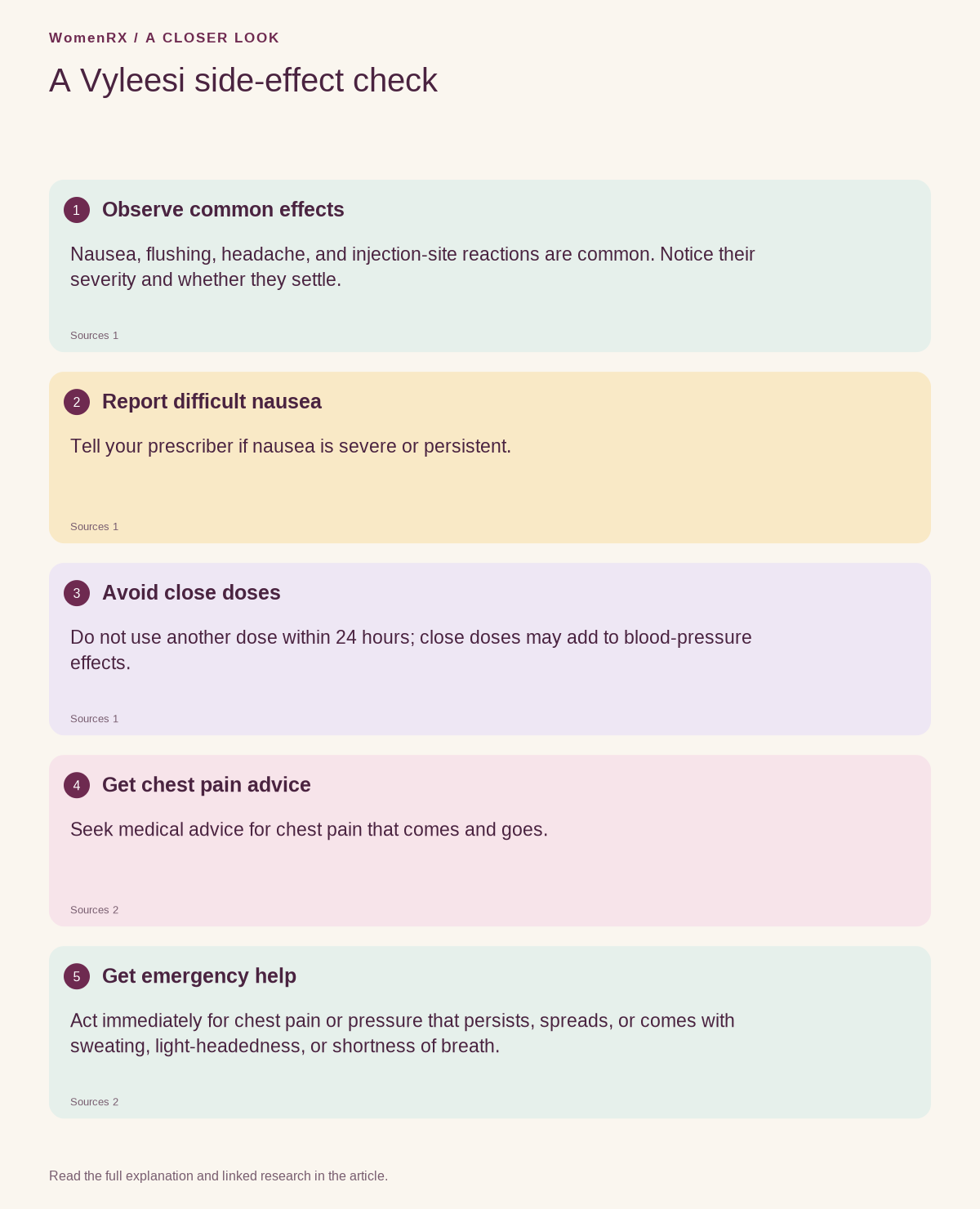
A Vyleesi side-effect check
Observe common effects: Nausea, flushing, headache, and injection-site reactions are common. Notice their severity and whether they settle.1
Report difficult nausea: Tell your prescriber if nausea is severe or persistent.1
Avoid close doses: Do not use another dose within 24 hours; close doses may add to blood-pressure effects.1
Get chest pain advice: Seek medical advice for chest pain that comes and goes.2
Get emergency help: Act immediately for chest pain or pressure that persists, spreads, or comes with sweating, light-headedness, or shortness of breath.2
Read the figure as text
Sort what you notice by the response it calls for; this is not a diagnostic score.- Observe common effects: Nausea, flushing, headache, and injection-site reactions are common. Notice their severity and whether they settle.1
- Report difficult nausea: Tell your prescriber if nausea is severe or persistent.1
- Avoid close doses: Do not use another dose within 24 hours; close doses may add to blood-pressure effects.1
- Get chest pain advice: Seek medical advice for chest pain that comes and goes.2
- Get emergency help: Act immediately for chest pain or pressure that persists, spreads, or comes with sweating, light-headedness, or shortness of breath.2
More questions, answered
Does nausea happen only after the first injection?
No. It was reported most often after the first dose in the trials, but it can occur after later doses. The label describes a duration of about two hours; individual experiences vary. Tell your prescriber if it’s severe or persists. 1