Before Taking Slynd: Conditions and Medicines to Review
Kidney impairment, adrenal insufficiency, or liver impairment can rule out Slynd, while some medicines call for a potassium check or a different contraception plan.
Slynd is a drospirenone-only birth control pill. Don’t use it if you have kidney impairment, adrenal insufficiency, liver impairment or tumors, certain cancers, or unexplained vaginal bleeding. Other concerns, including medicines that raise potassium or reduce contraceptive effectiveness, need a closer review rather than an automatic no. If you may be pregnant, address that before starting. 2
First, separate a reason not to use it from a reason to review it
Slynd’s active ingredient, drospirenone, can raise potassium in the blood. That makes some health conditions a firm reason not to use Slynd, while other concerns call for a conversation about monitoring or a different contraceptive choice. A medicine interaction can affect either potassium levels or how reliably the pill prevents pregnancy. Those are different problems, and they deserve different questions. 2
The Slynd prescribing information says not to use it if you have kidney impairment; adrenal insufficiency; liver impairment or a liver tumor; current or past cervical cancer or another progestin-sensitive cancer; or abnormal uterine bleeding that hasn’t been diagnosed. If any of these applies to you, the next step is to discuss another method, not to assume a potassium test will make Slynd suitable. 2
Unexplained bleeding belongs on that list, but it isn’t the same thing as every change in bleeding. Spotting and irregular periods can happen while taking Slynd. Bleeding that hasn’t been explained needs assessment rather than an assumption that it’s a pill side effect. 2
Why your medicine list matters
Drospirenone can increase potassium, and some other medicines can, too. The Slynd label names ACE inhibitors, angiotensin-II receptor blockers, potassium-sparing diuretics, aldosterone antagonists, potassium supplements, heparin, and nonsteroidal anti-inflammatory drugs (NSAIDs) as examples to review. Their presence on your medicine list does not automatically mean you cannot take Slynd. If you take a potassium-raising medicine daily over the long term for a chronic condition, the label calls for a potassium check before starting Slynd and during the first treatment cycle. 2
Other interactions work differently:
- Some medicines may reduce contraceptive effectiveness. The label names enzyme-inducing medicines such as carbamazepine, phenytoin, and rifabutin, as well as products containing St. John’s wort. These can lower hormonal contraceptive concentrations and may also cause breakthrough bleeding. Tell your prescriber or pharmacist about them so you can make a reliable contraception plan. 2
- Some medicines may increase drospirenone exposure. With long-term use of a strong CYP3A4 inhibitor, such as ketoconazole, itraconazole, voriconazole, or clarithromycin, the label says to consider potassium monitoring in someone at increased risk. This is a separate issue from medicines that make the pill less effective. 2
Bring the names of your prescription medicines, over-the-counter medicines, and supplements. In particular, mention potassium supplements, NSAIDs, and St. John’s wort rather than assuming a nonprescription product won’t matter. 2
Pregnancy, postpartum, and breastfeeding
Slynd prevents pregnancy; it isn’t used during pregnancy. If you’re pregnant, stop taking it. If pregnancy is possible before you start, say so when choosing contraception. If you become pregnant while using Slynd and have severe abdominal pain, seek urgent care: a pregnancy outside the uterus is a medical emergency. 2
Breastfeeding, by itself, isn’t listed as a reason not to use Slynd. The label reports that negligible amounts of drospirenone enter breast milk and that adverse effects on milk production or infant health, growth, or development generally haven’t been found with progestin-only pills. A study of 100 breastfeeding women who had already used a drospirenone-only pill for at least five months found infant growth measurements within expected ranges, but its selected group and retrospective design cannot answer every question about starting soon after birth. If you’ve recently given birth, include breastfeeding and your current medicines in the same contraception discussion. 21
Other history worth raising
A past blood clot, stroke, or heart attack is something the Slynd patient information asks you to disclose; it is not listed with the conditions above as an automatic contraindication. It also asks about depression. If you have diabetes, the label notes that blood sugar monitoring or diabetes treatment may need review. These details help make the choice specific to your health rather than turning every concern into a blanket ban. 2
The practical distinction is this: kidney impairment; adrenal insufficiency; liver impairment or tumors; the listed cancers; and undiagnosed abnormal bleeding call for a different plan. Potassium-raising medicines, medicines that alter contraceptive effectiveness, and the other history above call for an individualized review before relying on Slynd. 2
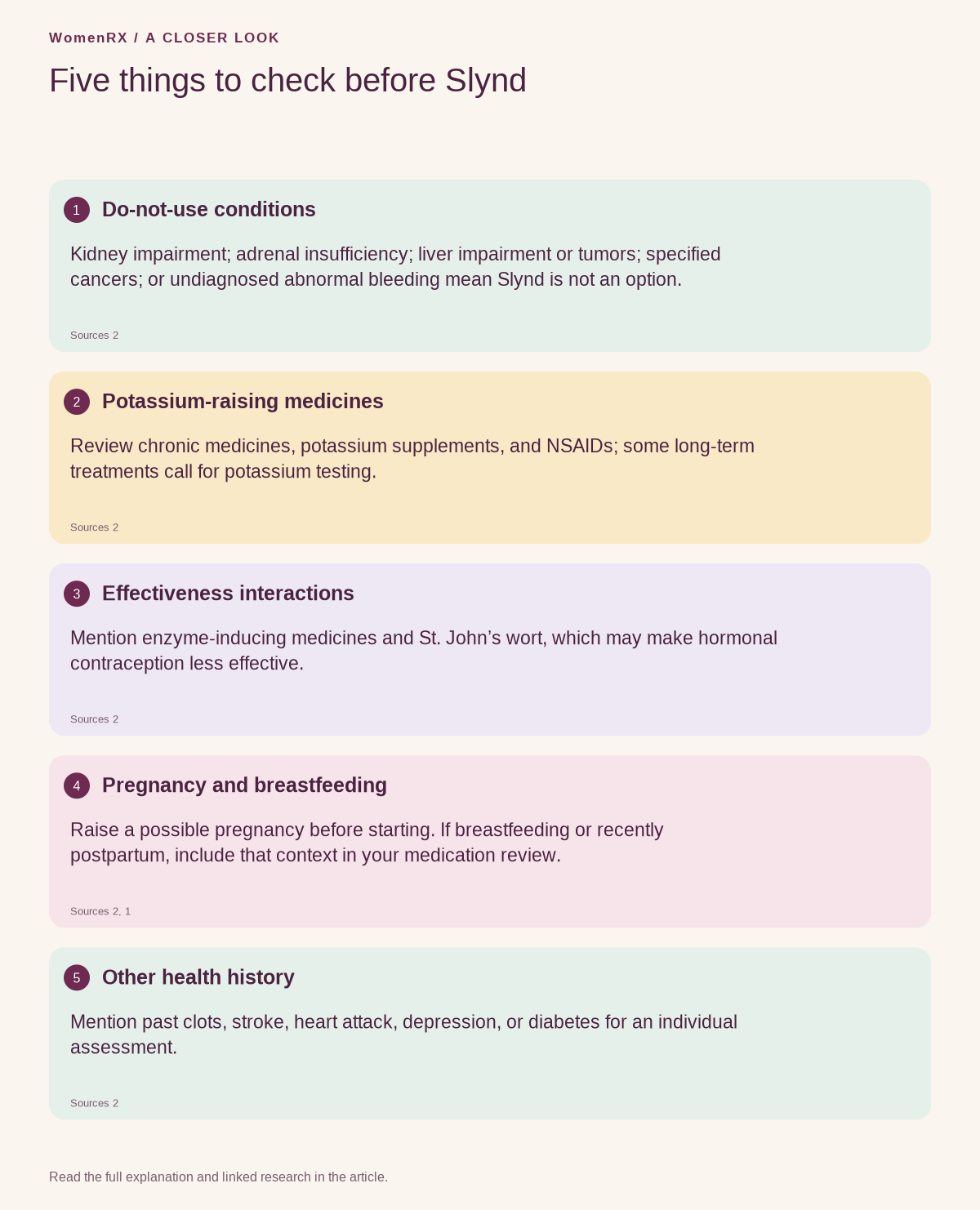
Five things to check before Slynd
Do-not-use conditions: Kidney impairment; adrenal insufficiency; liver impairment or tumors; specified cancers; or undiagnosed abnormal bleeding mean Slynd is not an option.2
Potassium-raising medicines: Review chronic medicines, potassium supplements, and NSAIDs; some long-term treatments call for potassium testing.2
Effectiveness interactions: Mention enzyme-inducing medicines and St. John’s wort, which may make hormonal contraception less effective.2
Pregnancy and breastfeeding: Raise a possible pregnancy before starting. If breastfeeding or recently postpartum, include that context in your medication review.21
Other health history: Mention past clots, stroke, heart attack, depression, or diabetes for an individual assessment.2
Read the figure as text
These prompts separate reasons not to use Slynd from questions that need an individual contraception or monitoring plan.- Do-not-use conditions: Kidney impairment; adrenal insufficiency; liver impairment or tumors; specified cancers; or undiagnosed abnormal bleeding mean Slynd is not an option.2
- Potassium-raising medicines: Review chronic medicines, potassium supplements, and NSAIDs; some long-term treatments call for potassium testing.2
- Effectiveness interactions: Mention enzyme-inducing medicines and St. John’s wort, which may make hormonal contraception less effective.2
- Pregnancy and breastfeeding: Raise a possible pregnancy before starting. If breastfeeding or recently postpartum, include that context in your medication review.21
- Other health history: Mention past clots, stroke, heart attack, depression, or diabetes for an individual assessment.2
More questions, answered
Does everyone taking Slynd need a potassium test?
No. The label specifically calls for testing before treatment and during the first treatment cycle for people taking daily, long-term medicines for chronic conditions that may raise potassium. It also says to consider monitoring for people at increased risk who take a strong CYP3A4 inhibitor long-term with Slynd. 2
What if I develop symptoms that could signal high potassium?
Get urgent medical help for symptoms the Slynd patient information lists, such as palpitations or an irregular heartbeat, weakness or numbness in an arm or leg, severe chest pain, or shortness of breath. 2
Sources you can check
- The drospirenone only pill as a contraceptive option for breastfeeding women: First data on users' acceptability and newborn development.Regidor PA, Colli E, Jakimiuk A. · Gynecological endocrinology : the official journal of the International Society of Gynecological Endocrinology · 2024Return to first citation
- SLYND drospirenone tablets, ExeltisAccessed 2026-09-25Return to first citation