Alcohol on Ozempic: What Changes the Risk
Your other diabetes medicines and whether you can eat normally matter more than a simple yes-or-no rule.
There isn’t a blanket all-clear. Ozempic can raise low-blood-sugar risk when used with insulin or a sulfonylurea, and drinking too much alcohol without enough food can also contribute to a low. That doesn’t establish a direct alcohol-Ozempic interaction or a universally safe amount. If either concern fits your situation, ask how your low-blood-sugar plan applies. 3 4
The question isn’t just “Does alcohol interact with Ozempic?”
The Ozempic injection prescribing information identifies increased low-blood-sugar risk when Ozempic is used with insulin or a sulfonylurea, a type of medicine that helps the pancreas release insulin. It doesn’t establish a direct alcohol-Ozempic interaction or give a universally safe amount of alcohol. 3
For a practical decision, pay particular attention to your other diabetes medicines and whether you’ll be eating normally. Drinking too much alcohol without enough food can contribute to low blood sugar. 4
When food and symptoms change the picture
The concern is more immediate if you’re sick, eating much less than usual, or unable to keep food down. Not getting enough food while sick can contribute to hypoglycemia, especially if you also take diabetes medicines that can cause lows. 3 4
Stomach symptoms deserve their own attention. Nausea, vomiting and diarrhea occurred more often with oral semaglutide tablets than with placebo in trials, with most reports of those symptoms occurring during dose increases. Those tablet findings aren’t a measure of how often symptoms occur with Ozempic injections. Too much alcohol at once can also cause vomiting. If you can’t keep food down, the low-blood-sugar concern depends in part on your other diabetes medicines. 1 2 3 4
Low-blood-sugar symptoms can come on quickly. Hunger is one possible sign, though the signs can differ from person to person. A stomach symptom alone won’t tell you whether your glucose is low. If you have diabetes and notice a possible low, use your existing plan for checking and treating it rather than guessing at the cause. 4
Severe hypoglycemia can cause someone to pass out. 4
Who should ask before drinking?
It’s worth getting individual guidance first if you:
- Take insulin or a sulfonylurea along with Ozempic. The combination increases low-blood-sugar risk, and the medication label says the risk may be lowered by changing the insulin or sulfonylurea dose. Don’t make that change yourself. 3
- Are eating less than usual, sick, or having trouble keeping food down. Not getting enough food can contribute to hypoglycemia. 4
- Have had low blood sugar before or aren’t sure how your personal treatment plan applies when alcohol is involved. Asking how to recognize, check and respond to a low is a practical way to make that conversation specific. 3 4
Neither a universal alcohol allowance nor a blanket rule for everyone taking Ozempic follows from these low-blood-sugar concerns. That conversation can clarify what to watch for and what to do if your blood sugar drops.
Pregnancy and breastfeeding are separate questions
If you’re pregnant, alcohol guidance is different from the question of a drug interaction. A review of 18 international guidelines addressing alcohol use disorder care during pregnancy found that 89% recommended counseling to stop alcohol use. That finding describes those guidelines, not an alcohol-and-Ozempic study. Ozempic also has a separate pregnancy warning: human data are limited, and its prescribing information describes potential fetal risk based on animal studies. 3 5
Breastfeeding is another separate question. The low-blood-sugar information here doesn’t answer questions about alcohol or Ozempic during lactation. If you’re breastfeeding, raise both with the clinician managing your postpartum care rather than treating an answer about drinking while taking Ozempic as breastfeeding guidance.
A useful way to frame the conversation
You can make the question specific: “I take Ozempic and [name your other diabetes medicine]. If I drink, what should I do about checking and treating a low, especially if I eat less than usual?” Bring up any recent lows and whether illness or appetite changes have affected your meals. The goal is a plan that fits your medicines and real eating patterns, not a one-size-fits-all rule.
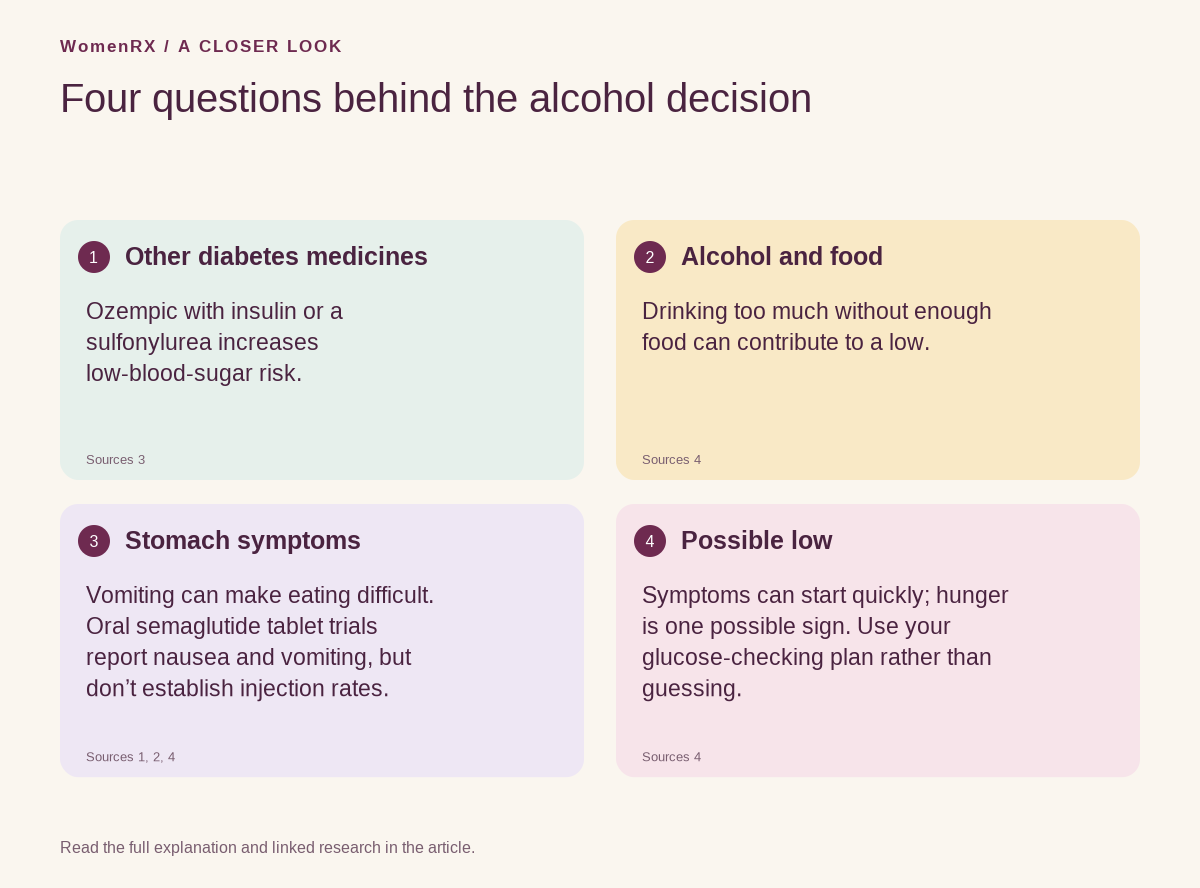
Four questions behind the alcohol decision
Other diabetes medicines: Ozempic with insulin or a sulfonylurea increases low-blood-sugar risk.3
Alcohol and food: Drinking too much without enough food can contribute to a low.4
Stomach symptoms: Vomiting can make eating difficult. Oral semaglutide tablet trials report nausea and vomiting, but don’t establish injection rates.124
Possible low: Symptoms can start quickly; hunger is one possible sign. Use your glucose-checking plan rather than guessing.4
Read the figure as text
These concerns have different sources. Sorting them out helps make a question about drinking more specific.- Other diabetes medicines: Ozempic with insulin or a sulfonylurea increases low-blood-sugar risk.3
- Alcohol and food: Drinking too much without enough food can contribute to a low.4
- Stomach symptoms: Vomiting can make eating difficult. Oral semaglutide tablet trials report nausea and vomiting, but don’t establish injection rates.124
- Possible low: Symptoms can start quickly; hunger is one possible sign. Use your glucose-checking plan rather than guessing.4
More questions, answered
Does Ozempic itself cause low blood sugar?
The injection label explains that semaglutide stimulates insulin release when blood glucose is elevated. Its specific warning about increased hypoglycemia risk concerns Ozempic used with insulin or an insulin secretagogue such as a sulfonylurea. That doesn’t mean a low is impossible in every other circumstance, but the warning shouldn’t be read as saying Ozempic alone has the same risk as those combinations. 3
What if I feel hungry after drinking?
Hunger can be a sign of low blood sugar, and symptoms may come on quickly. If you have diabetes, use your checking and treatment plan rather than assuming hunger is just an effect of alcohol. 4
Sources you can check
- Alcohol | Drinking | MedlinePlusAccessed 2026-09-25Return to first citation
- OZEMPIC (ORAL SEMAGLUTIDE) TABLET RYBELSUS (ORAL SEMAGLUTIDE) TABLET [NOVO NORDISK PHARMACEUTICAL INDUSTRIES, LP] | US prescribing information and patient instructionsAccessed 2026-09-25Return to first citation
- OZEMPIC (SEMAGLUTIDE) INJECTION, SOLUTION [A-S MEDICATION SOLUTIONS] | US prescribing information and patient instructionsAccessed 2026-09-25Return to first citation
- Hypoglycemia: MedlinePlusAccessed 2026-09-25Return to first citation
- A Systematic Review of International Guidelines for Addressing Alcohol Use Disorder in Pregnancy.Cary CB, Hynes EOB, Terplan M, McNamara KA, Tardelli VS, Fidalgo TM, Bello JK, Doering M, Grucza RA, Jones HE, Duggal R, Kelly JC, Martins SS, Martin CE, Xu KY. · Alcohol, clinical & experimental research · 2026Return to first citation