Starting Ozempic: What to Eat Before Your First Dose
You don’t need a special meal or a fasting plan before Ozempic, but a little preparation can help if your appetite or digestion changes.
There’s no required food or meal plan before starting Ozempic: the injection can be taken with or without food. Instead of making a big diet change in advance, plan how you’ll keep eating and drinking if nausea or reduced appetite makes meals harder. If you have diabetes, ask your care team how eating less could affect your glucose checks and current medication plan. 2
The short version: eat as you normally would
You don’t need to fast, eat a particular food, or time your first Ozempic injection around a meal. The U.S. prescribing information says Ozempic may be taken with or without food. Food planning is about making the first weeks easier to manage, not preventing side effects or changing how you take the medicine. 2
Before you start, think about what you’ll do if you feel full sooner than usual or have less interest in food. In placebo-controlled trials, gastrointestinal adverse reactions overall were more frequent with Ozempic than placebo. The prescribing information says most reports of nausea, vomiting, or diarrhea occurred during dose escalation; the figures reported for gastrointestinal reactions overall don’t establish that each individual symptom was more frequent. A meal choice cannot guarantee you’ll avoid them. 2
Make a flexible plan, not a restrictive one
If eating feels uncomfortable, smaller, more frequent meals may be easier to manage than large meals. A clinical review of GLP-1 medicines also suggests staying hydrated and avoiding high-fat or high-sugar foods as possible strategies for gastrointestinal symptoms. These are options to try if they suit you, not rules you have to follow before your first dose or proven ways to prevent symptoms. 13
It can also help to keep simple, familiar foods available and choose a range of foods when you can. Appetite changes may make it harder to eat enough or maintain variety; a 2026 narrative review of GLP-1-based obesity treatment identifies adequate protein and overall nutritional intake as considerations during treatment. It does not establish one meal plan that works for everyone, and it isn’t specific to women with diabetes. 4
If your appetite drops, the useful question isn’t just “What should I cut out?” It’s also “What can I still manage to eat and drink?” If nausea or other symptoms persist, contact your prescriber rather than relying on food changes alone. The product information advises promptly reporting persistent nausea, vomiting, or diarrhea; ongoing fluid loss can lead to dehydration and kidney problems. 2
With diabetes, coordinate food changes with glucose care
You don’t need to change diabetes medicines on your own to prepare for Ozempic. If you expect to eat less, ask your care team whether that changes your glucose-checking plan or how to handle your existing diabetes medicines. Bring up the kinds of meals you usually eat and any past difficulty with nausea, low appetite, or keeping fluids down. The goal is an individualized plan, not a new set of food rules.
If you’re planning a pregnancy or breastfeeding, mention that before starting and ask how your medication, nutrition, and glucose plans should be handled for your situation. The right food plan alone can’t answer whether a medicine is appropriate for you.
A few useful questions before you start
- Can I keep my usual meals, or is there a specific change you recommend for my health needs?
- If I eat less than usual, should I change how I check my glucose or respond to my readings?
- What should I do if nausea, vomiting, diarrhea, or constipation makes eating or drinking difficult?
- If I’m planning a pregnancy or breastfeeding, how should that affect my medication and nutrition plans?
Seek prompt medical advice if vomiting comes with signs of dehydration, such as a dry mouth, urinating less often, or dark urine. 1 If symptoms are persistent, tell your prescriber rather than trying to solve them by skipping meals or changing diabetes medicines yourself. 2
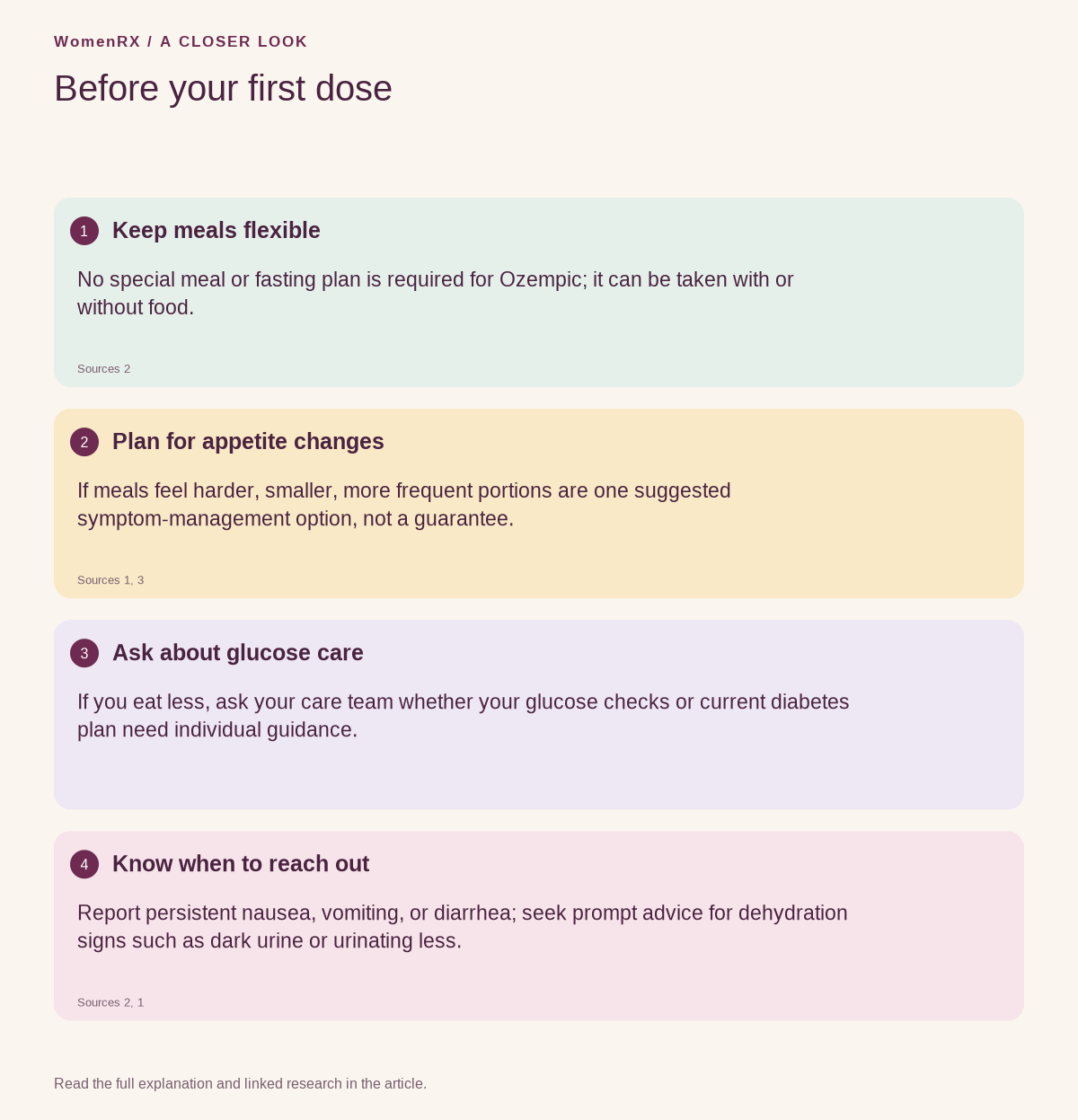
Before your first dose
Keep meals flexible: No special meal or fasting plan is required for Ozempic; it can be taken with or without food.2
Plan for appetite changes: If meals feel harder, smaller, more frequent portions are one suggested symptom-management option, not a guarantee.13
Ask about glucose care: If you eat less, ask your care team whether your glucose checks or current diabetes plan need individual guidance.
Know when to reach out: Report persistent nausea, vomiting, or diarrhea; seek prompt advice for dehydration signs such as dark urine or urinating less.21
Read the figure as text
A short preparation checklist separates routine food planning from questions that need an individualized diabetes-care answer.- Keep meals flexible: No special meal or fasting plan is required for Ozempic; it can be taken with or without food.2
- Plan for appetite changes: If meals feel harder, smaller, more frequent portions are one suggested symptom-management option, not a guarantee.13
- Ask about glucose care: If you eat less, ask your care team whether your glucose checks or current diabetes plan need individual guidance.
- Know when to reach out: Report persistent nausea, vomiting, or diarrhea; seek prompt advice for dehydration signs such as dark urine or urinating less.21
More questions, answered
Do I need to eat before my Ozempic injection?
No. The prescribing information says Ozempic can be taken with or without food. You don’t need to plan a special meal around the injection. 2
Can a certain food prevent nausea?
No particular food is guaranteed to prevent nausea. Smaller, more frequent meals and hydration are suggested strategies for managing gastrointestinal symptoms, but they aren’t a guarantee. 13
Sources you can check
- Nausea | Vomiting | MedlinePlusAccessed 2026-09-25Return to first citation
- OZEMPIC (SEMAGLUTIDE) INJECTION, SOLUTION [A-S MEDICATION SOLUTIONS] | US prescribing information and patient instructionsAccessed 2026-09-25Return to first citation
- GLP1 and GIP Receptor Agonists: Effects on the Gastrointestinal Tract and Management Strategies for Primary Care Physicians.Saha B, Kamalumpundi V, Codipilly DC. · Mayo Clinic proceedings · 2025Return to first citation
- Lean Mass and Musculoskeletal Preservation in GLP-1-Based Obesity Treatment: Nutrition, Exercise, Supplementation, and Monitoring Strategies.Šantić R, Martinović L, Pavlović N, Rušić D, Kumrić M, Martinović D, Tičinović Kurir T, Božić J. · Metabolites · 2026Return to first citation