Getting Thyroid Medication Online Without Losing Follow-Up
A remote refill review works best when you can show what you take, why you take it, and how your thyroid levels have been monitored.
For an established thyroid condition, gather your exact medication and dose, the records that explain your diagnosis, and recent thyroid test results with their dates. Ask whether those results are current enough for a refill and when testing should happen next. If you don’t have a diagnosis yet, ask what evaluation is needed; medication doses depend on individual factors. 2 If you’re pregnant or planning pregnancy, say so promptly because your care needs may change. 12
First, clarify whether this is a refill or a new diagnosis
A remote visit can help continue care for a thyroid condition that’s already been diagnosed, but a refill shouldn’t be treated as a substitute for reviewing why you take the medicine and whether the plan still fits. Levothyroxine dosing is individualized, and follow-up uses clinical response and laboratory results. For adults with primary hypothyroidism, US prescribing information describes TSH as a key measure for adjusting treatment toward a normal level. 2
If you’ve never had a clear diagnosis, or you’re asking for thyroid medicine because you have symptoms you think might be thyroid-related, tell the clinician that this is a new evaluation. Ask how they’ll determine what condition is being treated and whether testing is needed before choosing a medication. Symptoms by themselves don’t tell you what dose is right. If you’ve been told your hypothyroidism is secondary or tertiary, mention that specifically. TSH isn’t a reliable measure for monitoring treatment in those forms. For levothyroxine, prescribing information uses free T4; for liothyronine, it uses serum T3. 23
Gather the details that make a remote review useful
Before the visit, collect whatever you have. You don’t need a perfect medical file; gaps are useful to point out rather than guess around.
- Medication details: Write down the medicine name, strength, how you take it, and whether it’s levothyroxine, liothyronine, or both. Include the label or a clear photo if that’s easiest. Dosing depends on the condition being treated, other health factors, and other medicines, so the clinician needs the actual regimen rather than an estimate. 23
- Diagnosis history: Bring the name of the condition as it appears in your records, when it was diagnosed, and any relevant history you know, such as thyroid surgery or treatment for thyroid cancer. If you aren’t sure what the original diagnosis was, say so.
- Lab results: Share the result, date, and reference range for each recent thyroid test you have, including TSH, free T4, or T3 if you have them. A number without its date or lab range is harder to interpret. Ask whether the clinician needs updated testing before deciding about the refill.
- Changes since the last review: Note dose changes, missed monitoring, a different medication, or a meaningful change in how you’re feeling or your health. Bring a list of prescription medicines, vitamins, and supplements. Biotin can affect thyroid test results, so mention it before testing. 1
A clear timeline helps connect the dots: “I’ve taken this dose since [month/year], my last test was [date], and the dose changed after [event].” That’s an example of a helpful summary, not a required script.
Agree on what happens after the refill
Regular blood tests are part of levothyroxine treatment because the right dose is assessed using both how you’re doing and lab results. 12 Don’t assume that a refill means monitoring is settled. Before the remote visit ends, make sure you understand whether a lab test is needed now, who will review the result, and when the next check is expected. The timing should reflect your situation; a stable dose and a recent dose change aren’t the same review. US prescribing information calls for dose adjustments based on periodic clinical and laboratory assessment. 2
A few useful questions:
- Are my recent results enough to make a refill decision, or do I need updated labs?
- Which test matters for my diagnosis and medication: TSH, free T4, or T3?
- Who will contact me if a result calls for a change?
- When should we review the dose and testing plan again?
- What should I do if I can’t complete the lab work or my records aren’t available?
If the remote clinician can’t confirm the diagnosis, interpret the available results, or arrange appropriate follow-up, the next step may be additional testing or an in-person evaluation. That’s a reason to clarify the plan, not to change the dose on your own.
Check what an online price covers
A medication listing isn’t the total cost of remote care. For one concrete example, on September 25, 2026, Cost Plus Drugs listed 30 levothyroxine tablets at 125 micrograms each for $6.07, with $5.25 standard shipping listed separately; taxes and final shipping costs varied by location. That’s a price for a particular prescription-required product and quantity, not a recommended dose or a guaranteed future price. It doesn’t price a clinician visit, laboratory testing, or a treatment plan. 4 If you’re comparing options, ask separately what the medication, remote visit, testing, and any follow-up will cost.
Raise pregnancy plans early
If you’re pregnant, might be pregnant, or are planning a pregnancy, tell the clinician at the start of the review. Pregnancy can change thyroid medication and testing needs; levothyroxine information advises additional blood tests during pregnancy, and prescribing information describes more frequent monitoring and dose adjustment when needed. 12 Ask for a specific plan for testing and follow-up rather than assuming your usual schedule still applies.
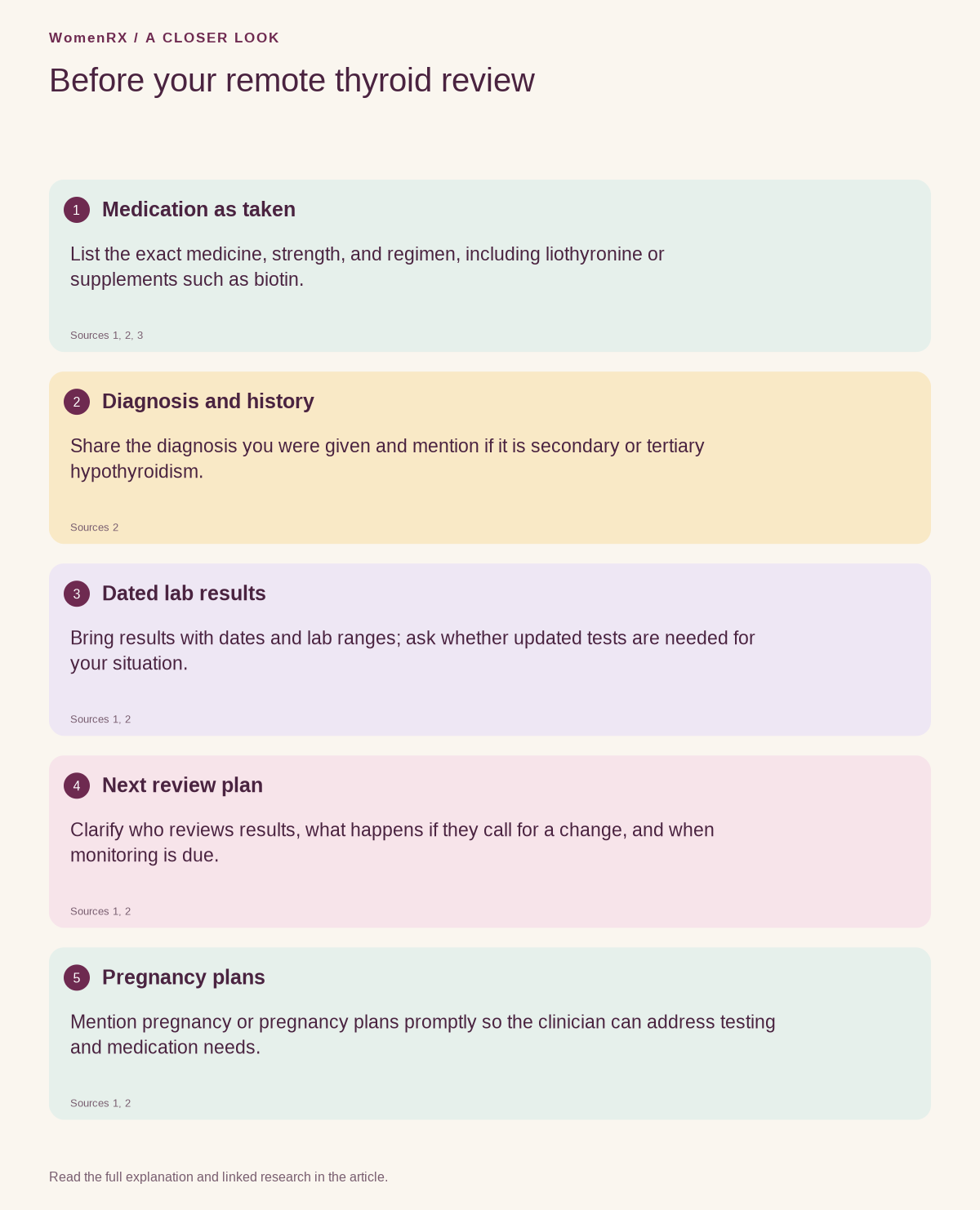
Before your remote thyroid review
Medication as taken: List the exact medicine, strength, and regimen, including liothyronine or supplements such as biotin.123
Diagnosis and history: Share the diagnosis you were given and mention if it is secondary or tertiary hypothyroidism.2
Dated lab results: Bring results with dates and lab ranges; ask whether updated tests are needed for your situation.12
Next review plan: Clarify who reviews results, what happens if they call for a change, and when monitoring is due.12
Pregnancy plans: Mention pregnancy or pregnancy plans promptly so the clinician can address testing and medication needs.12
Read the figure as text
Gather the details that help distinguish an established-condition refill from a new evaluation and make the follow-up plan clear.- Medication as taken: List the exact medicine, strength, and regimen, including liothyronine or supplements such as biotin.123
- Diagnosis and history: Share the diagnosis you were given and mention if it is secondary or tertiary hypothyroidism.2
- Dated lab results: Bring results with dates and lab ranges; ask whether updated tests are needed for your situation.12
- Next review plan: Clarify who reviews results, what happens if they call for a change, and when monitoring is due.12
- Pregnancy plans: Mention pregnancy or pregnancy plans promptly so the clinician can address testing and medication needs.12
More questions, answered
What if I can’t find my old thyroid test results?
Tell the clinician which records are missing and when you think your last test or dose change occurred. Ask whether updated testing is needed before the refill decision; don’t fill in unknown dates or results from memory as though they’re certain.
Does a normal TSH always show that my dose is right?
Not for every diagnosis. TSH is not a reliable measure for monitoring treatment in secondary or tertiary hypothyroidism. Prescribing information uses free T4 to monitor levothyroxine treatment and serum T3 to monitor liothyronine treatment in those forms. Tell the clinician if you’ve been given either diagnosis and which medication you take. 23
Sources you can check
- Levothyroxine: a medicine for an underactive thyroid (hypothyroidism) - NHSAccessed 2026-09-25Return to first citation
- LEVOTHYROXINE SODIUM TABLET [CARDINAL HEALTH 107, LLC] | US prescribing information and patient instructionsAccessed 2026-09-25Return to first citation
- LIOTHYRONINE SODIUM TABLET [TEVA PHARMACEUTICALS USA, INC.] | US prescribing information and patient instructionsAccessed 2026-09-25Return to first citation
- Cost Plus Drugs: Levothyroxine exact package priceAccessed 2026-09-25Return to first citation